Labyrinth One spans the entire cancer continuum — from early detection to therapy guidance

Identify tumors as early as stage 0.

Track disease progression and therapy response.

Genomics, proteomics, single-cell sequencing, and culture.

Test therapeutic response using live patient-derived CTCs.
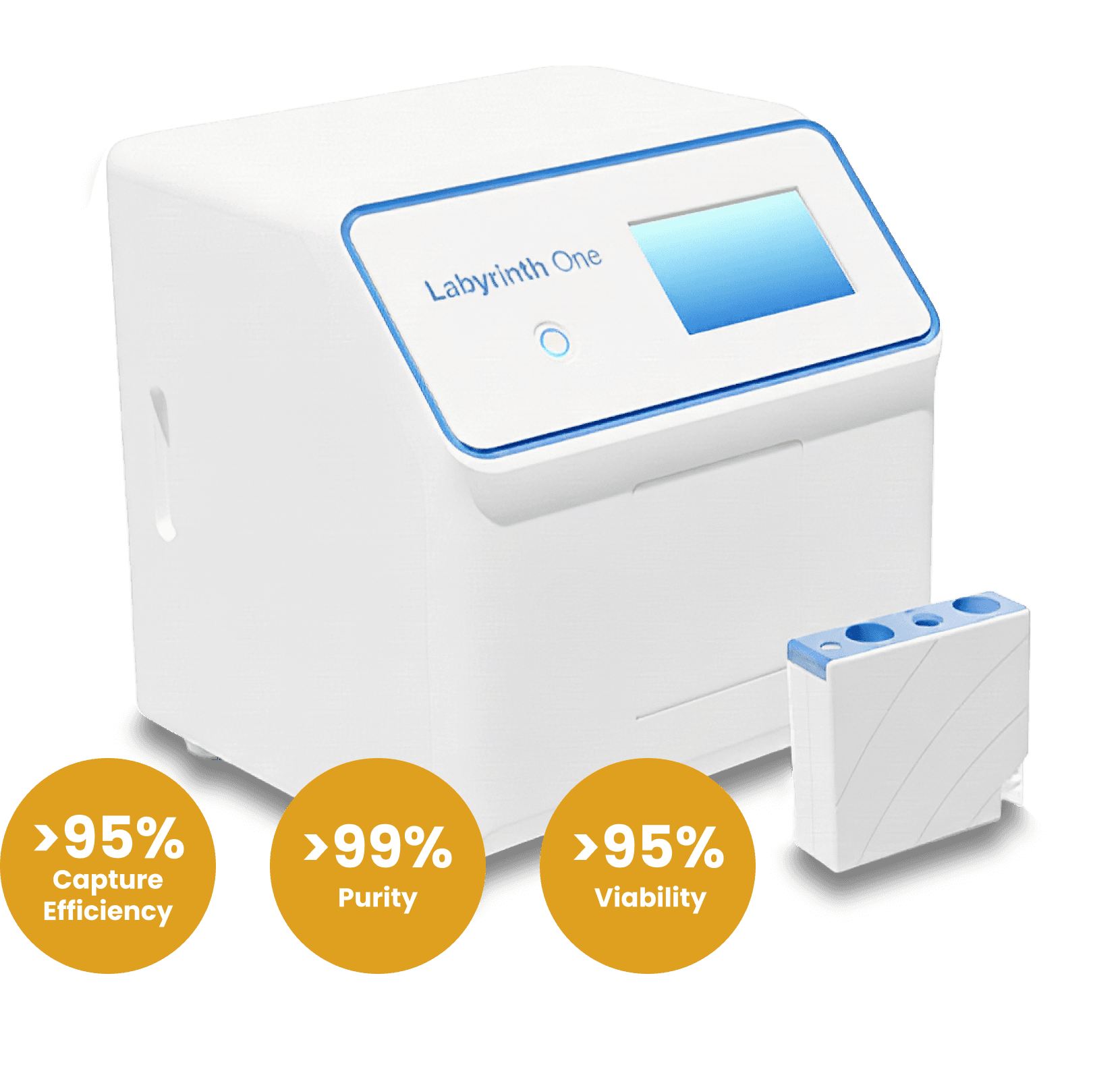
Labyrinth One is a compact benchtop system designed to fit seamlessly into most research and clinical laboratory environments. With plug-and-play operation and minimal training requirements, the instrument enables rapid, reliable purification of circulating tumor cells (CTCs) from standard blood samples. Laboratories can integrate Labyrinth One into existing workflows immediately, using routine equipment and personnel to achieve high-quality results with exceptional consistency.

Watch how Labyrinth One transforms routine blood samples into high-quality circulating tumor cells through a fully automated, plug-and-play workflow.
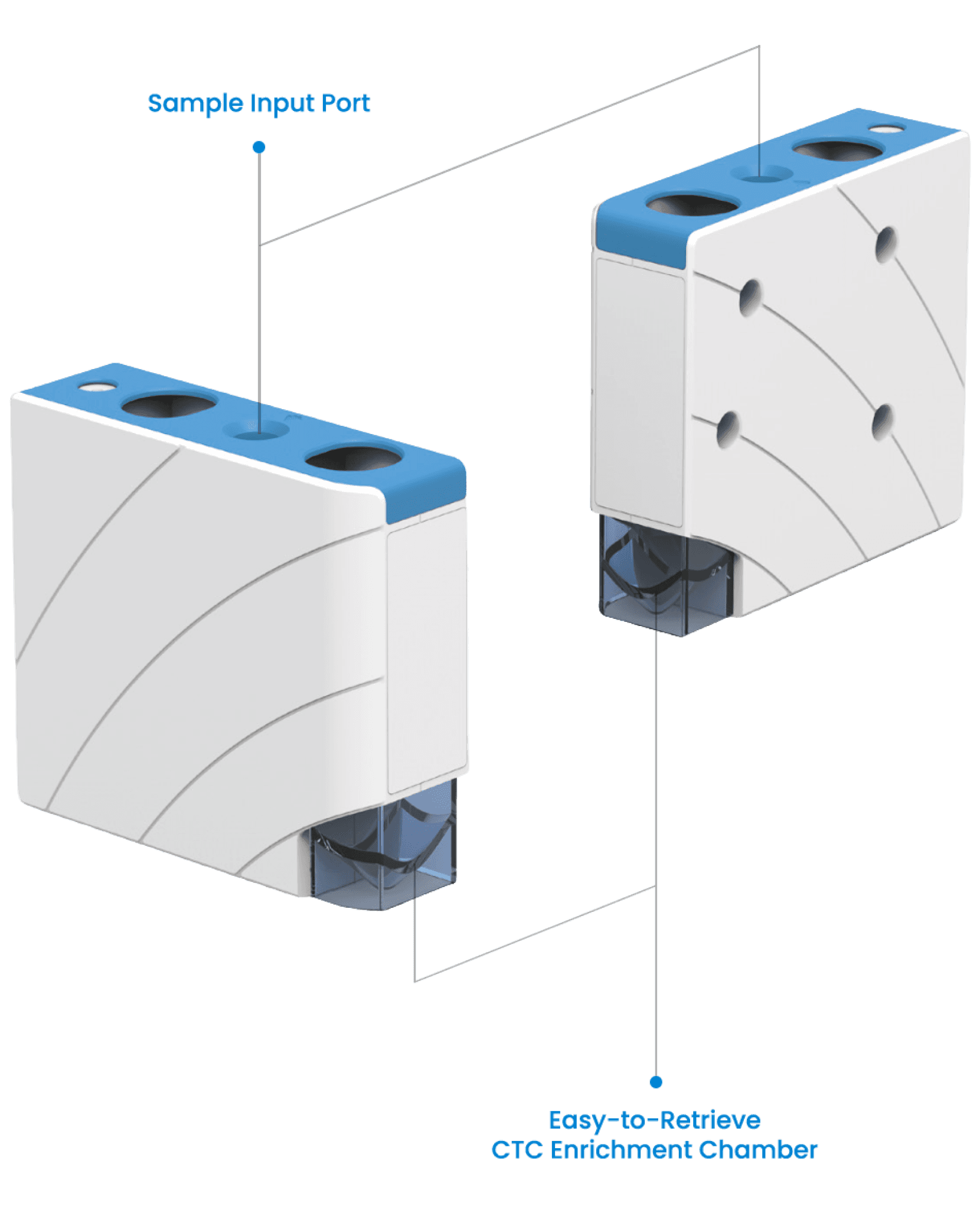
At the core of Labyrinth One is the patented Labyrinth Chip, a breakthrough in label-free microfluidics. It isolates CTCs based on physical properties (size, deformability, flow behavior) without antibody bias — capturing epithelial, mesenchymal, stem-like cells, and clusters.
Sterile, precision-engineered, and vacuum-sealed for safety.
All sample-contacting parts are disposable.
Clear placement indicators, ergonomic handle, and secure enrichment chamber for contamination-free retrieval.

Labyrinth One builds on more than ten years of research in microfluidic CTC isolation, supported by over 15 peer-reviewed publications. The technology has been evaluated and utilized by investigators across leading cancer centers and research institutions worldwide.


The purity and viability of Labyrinth-enriched CTCs enable a wide array of molecular, cellular, and imaging-based analyses. If you have additional analytical workflows in mind, our team can help determine compatibility and provide technical guidance.
Contact Us for Method Support →Download the full specification sheet for detailed information on performance metrics, instrument requirements, cartridge design, and workflow integration.
Coming Soon